
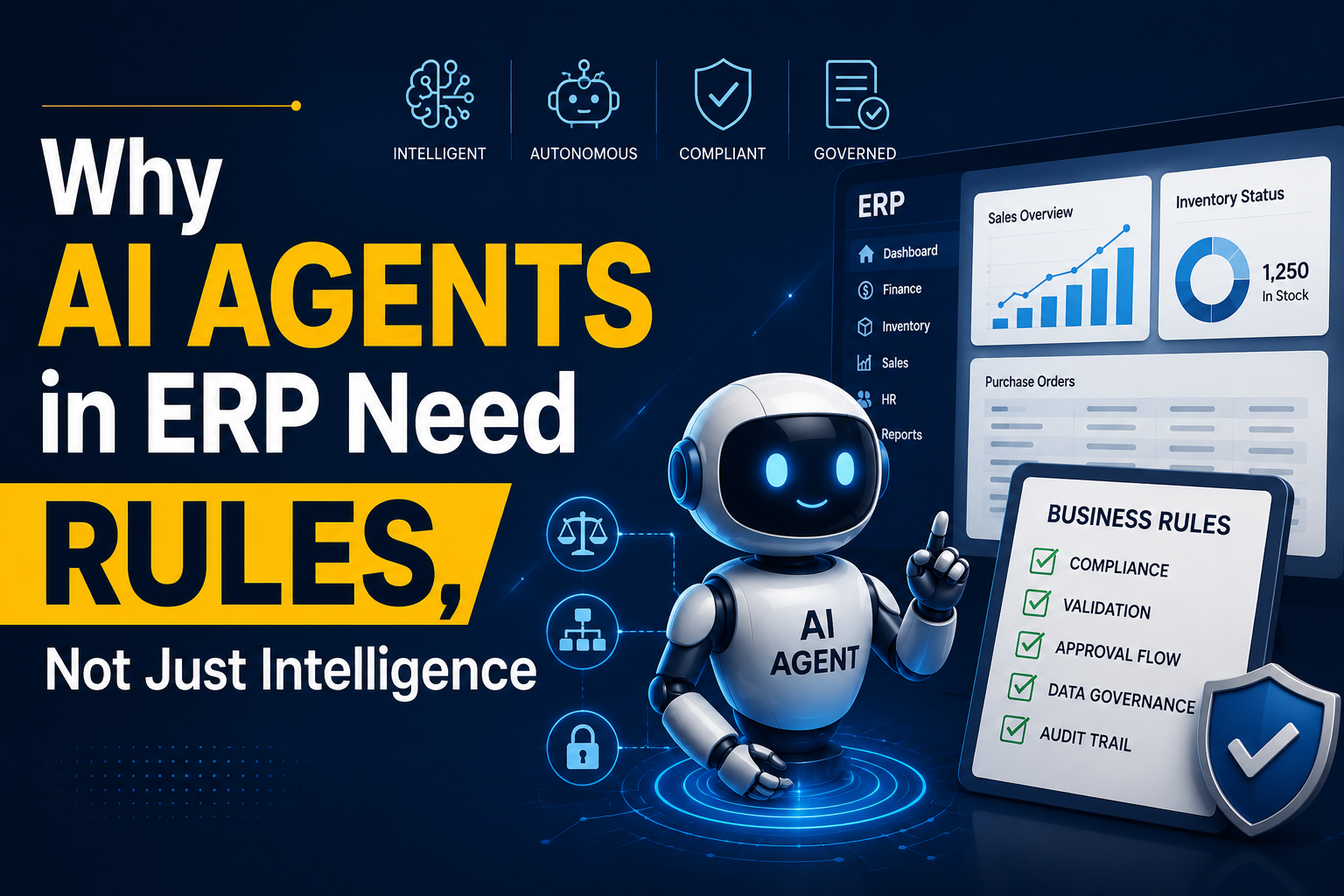
Why AI Agents in ERP Need Rules, Not Just Intelligence
The real barrier to AI adoption in ERP isn’t model intelligence — it’s trust.

For years, the AI conversation in enterprise software has been about intelligence — bigger models, better reasoning, more autonomy. But inside real ERP systems, that’s not what’s holding adoption back. The biggest obstacle to AI in ERP isn’t intelligence. It’s trust.
Every Exception Queue Tells the Same Story
Walk into any finance or procurement team and you’ll see it: a blocked invoice waiting on manual review, an unmatched payment sitting in a queue, a purchase order stuck behind multiple approvals. The delay is rarely because someone doesn’t know what to do. It’s because that knowledge lives in SOP documents, spreadsheets, email threads, and the heads of a handful of experienced employees — not in a system an AI agent can safely act on.
That’s starting to change. Instead of asking AI to “figure it out,” organizations are teaching agents to follow approved Standard Operating Procedures, retrieve live ERP data, escalate high-risk cases to a human, and log every action for audit.
From Smarter AI to Accountable AI
This is a real shift in how enterprise AI gets built. The future of AI in ERP won’t be defined by how autonomous an agent becomes — it will be defined by how well that autonomy is controlled. Companies that succeed here won’t just deploy agents; they’ll build governance around them:
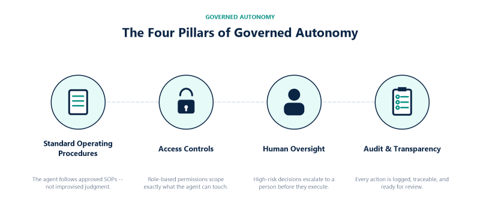
- Clear SOPs the agent is bound to follow
- Role-based permissions that scope what it can touch
- Human approval on critical or high-risk decisions
- Complete audit trails for every action taken
In enterprise software, the goal was never to replace human judgment — it’s to automate routine decisions while keeping every action transparent, compliant, and traceable.
The Second Mistake: Starting Too Big
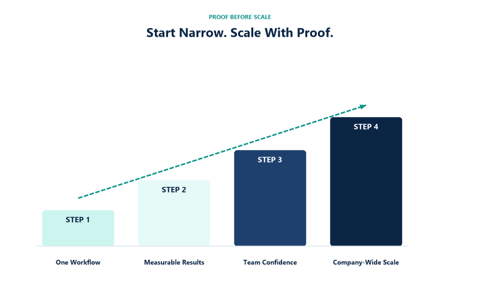
Governance solves how an agent should act. The next question is where to start. A consistent pattern shows up across enterprise AI rollouts: the strongest results come from applying AI to one specific, measurable process — not a company-wide deployment on day one.
Teams getting real ROI aren’t asking “How do we implement AI across the business?” They’re asking, “Which single workflow is costing us the most time, money, or manual effort?” That’s where AI delivers value first — automating invoice processing before touching all of finance, assisting customer support before replacing the workflow, sharpening demand forecasting before overhauling the supply chain.

A small, well-scoped win produces measurable results. Measurable results build confidence. And confidence is what makes scaling AI far less risky. The biggest mistake most leaders make isn’t starting too late — it’s starting too big.
A Practical Starting Point
You don’t need a perfect AI roadmap before taking the first step. You need one high-impact workflow, a clear success metric, and a partner who can help you test, learn, and improve before scaling further.
The Question Worth Asking
How prepared is your organization to govern agentic AI — not just deploy it? And if you had 90 days to prove AI’s ROI, which single process would you automate first?
If you’re exploring practical AI solutions that deliver measurable business value, we’d welcome the conversation — connect with the Nexcen team.